
Company Profile
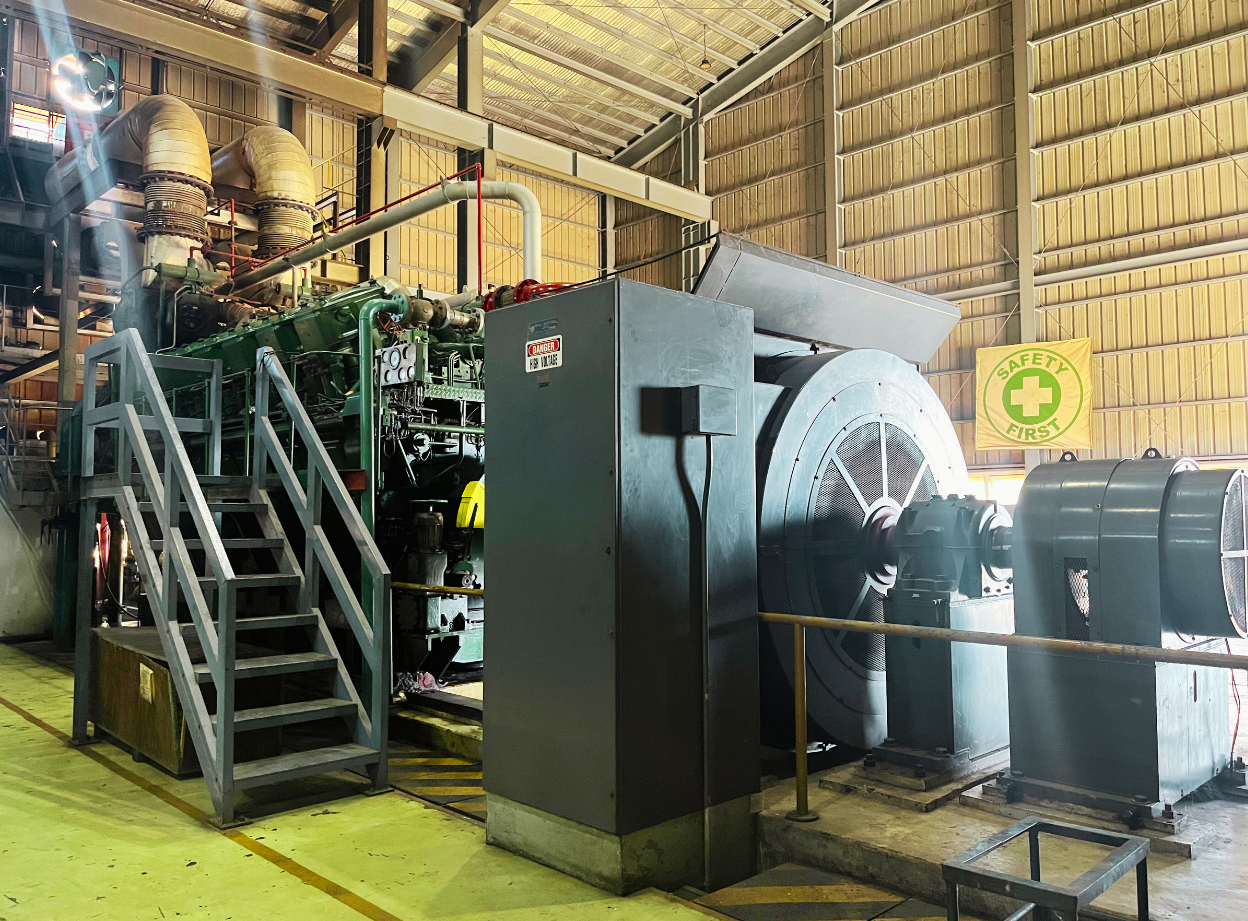
Tarlac Power Corporation (TPC) is a domestic corporation duly organized under and by virtue of the laws of the Republic of the Philippines, primarily involved in the generation of electricity. TPC power plant is equipped with bunker-fired engine generators with a total capacity of 18.6 MW. Its power plant is located at Sinait-Sto. Niño Road, Brgy. Sto. Niño, Tarlac City.
TPC was first registered with the SEC on 01 December 1993, with an authorized capital stock of Ten Million Pesos (₱10,000,000.00), divided into One Hundred Thousand (100,000) shares with par value of One Hundred Pesos (₱100.00) each.
On January 18, 1994, the Company increased its authorized capital stock to One Hundred Twenty-Two Million Pesos (₱122,000,000.00), divided into One Million Two Hundred Twenty Thousand (1,220,000) shares with a par value of One Hundred Pesos (P100.00) each.
On September 17, 2007, the Company’s authorized capital stock was increased to Two Hundred Forty-Four Million Pesos (P244,000,000.00), divided into Two million Four Hundred Forty Thousand (2,440,000) shares with a par value of One Hundred Pesos (₱100.00) each.
History
TPC was originally intended as a base load power source of Tarlac Electric Incorporated (TEI), and now used as a peaking plant for TEI requirements. TEI is a private electric utility with a franchise to serve the Municipality of Tarlac. On April 19, 1998, the Municipality of Tarlac was converted into a component city of the province of Tarlac by virtue of Republic Act 8596 signed by former President Fidel V. Ramos.
Due to massive power interruptions that have beset the country during the year 1993, TEI was not exempted from this power curtailment and was not able to meet the power requirements of Tarlac. While the town was going in its progressive development, massive brownouts have dimmed the vision of the government to fulfill its plan of making Tarlac a highly urbanized and industrialized municipality.
During his State of the Nation address on July 27, 1992, Former President Fidel V. Ramos requested that the Congress enact a law that would create an Energy Department to plan and manage the Philippines' energy sector. Congress not only created the Department of Energy but gave the president special emergency powers to resolve the power crisis. Using those powers, Ramos issued licenses to independent power producers (IPP) to provide additional power plants within 24 months. Ramos issued supply contracts that guaranteed the government would buy whatever power the IPPs produced under the contract.
On September 17, 2007, the Company’s authorized capital stock was increased to Two Hundred Forty-Four Million Pesos (P244,000,000.00), divided into Two million Four Hundred Forty Thousand (2,440,000) shares with a par value of One Hundred Pesos (₱100.00) each.
In June 1993, site development commenced at the 9-hectare lot owned by the Romero family at the Brgy. Sto. Niño, Tarlac, Tarlac.
On December 01, 1993, TPC was registered with the Securities and Exchange Commission (SEC).
In January 1994, the construction of the foundation for engine units 1 & 2, the power plant building, and auxiliaries started.
TPC generators were meticulously tested and commissioned to ensure optimal performance and reliability.
Installed Capacity
- Unit 1 - 6.3MW
- Unit 2 - 6.3MW
- Unit 3 - 6.0MW
- Total - 18.6MW
Unit #1 underwent rigorous testing and commissioning from June 16 to 18, 1995 followed by Unit #2 from August 2 to 4, 1995. Commercial operations for Unit #1 commenced on June 19, 1995, while Unit #2 began operating on August 5, 1995. Subsequently, Unit # 3 was tested and commissioned from July 26 to 28, 1997, and commercial operations started on July 29, 1997.
Vision
To be the model generation company in terms of quality of electricity and workforce.
Mission
- We will efficiently generate electricity that is reliable and environment-friendly.
- We will strive, at all times, to be sensitive to the needs of our employees and the community in which we operate.
- We will maintain the price of our electricity at an affordable level that is reflective of the true cost and at the same time generate the necessary revenues to satisfy the needs of the company and the goals of the stockholders.
- We will conduct our business with total integrity, honesty, dedication and professionalism at all times.
Values
- Excellence
- Loyalty to the Company
- Environmental consciousness
- Commitment to Safety
- Teamwork
- Responsibility to the community
- Integrity
- Continuing Improvement
LEADERSHIP COMPETENCIES
Business Knowledge
- Keeps him/herself updated on government regulations and industry developments.
- Keeps him/herself updated in his/her own area of responsibility.
Forward Looking
- Creates or suggests new ideas and practices.
- Anticipates changes in business environment.
Managing Change
- Develops strategies and activities.
- Informs others of the reason and benefits for the change.
Effective Communication
- Tailor-fits his/her way of communicating depending on audience.
- Encourages others to give feedback.
- Evaluates the performance of his/her staff and gives performance feedback.
- Gives guidance to his/her staff.
- Provides subordinates opportunities for development.
Results Driven
- Sets goals or objectives.
- Monitors the progress towards achievement of goals and objectives.
- Communicates goals and progress to the team.
Problem-solving
- Analyzes problems by gathering and integrating data.
- Formulates strategies to solve problems.
- Takes action to solve problems.
Effective Communication
- Tailor-fits his/her way of communicating depending on audience.
- Encourages others to give feedback.
CORE COMPETENCIES
Willingness to improve
- Accepts criticism or correction.
- Is open to training.
- Accepts new ways of doing work in terms of changes in policies, systems and technologies.
Dedication to work
- Comes to work on time.
- Delivers work on time and up to standard.
- Works with minimum supervision.
- Makes himself/herself available when needed.
Commitment to the company
- Gives feedback for the improvement of the company.
- Does not spread negative stories/statements of the company.
- Projects a positive image of the company.
- Follows company rules and procedures.
Integrity
- Does not accept/engage in under the table transactions.
- Follows corporate ethics.
Teamwork
- Disseminates knowledge and information through the proper channels.
- Shares knowledge with the team.
- Encourages others to achieve team goals.
- Is open to ideas of others.
Problem-solving
- Analyzes problems by gathering and integrating data.
- Formulates strategies to solve problems.
- Takes action to solve problems.
Effective Communication
- Tailor-fits his/her way of communicating depending on audience.
- Encourages others to give feedback.